

Kroger’s investor day laid out a leaner, more everyday-low-pricing (EDLP)-driven playbook. The chain plans fewer promotions, fewer banners, a $5 billion savings target redirected into lower prices, and a push to get e-commerce to 30% of sales.
“Our ambition at Kroger is simple: To build America’s favorite grocer. And today, you’re going to hear us talk about our plan to do that as we strengthen our core advantages, our scale, our store network, strong local banners, deep customer relationships, powerful brands and digital data and media assets,” CEO Gregory Foran shared during the event.
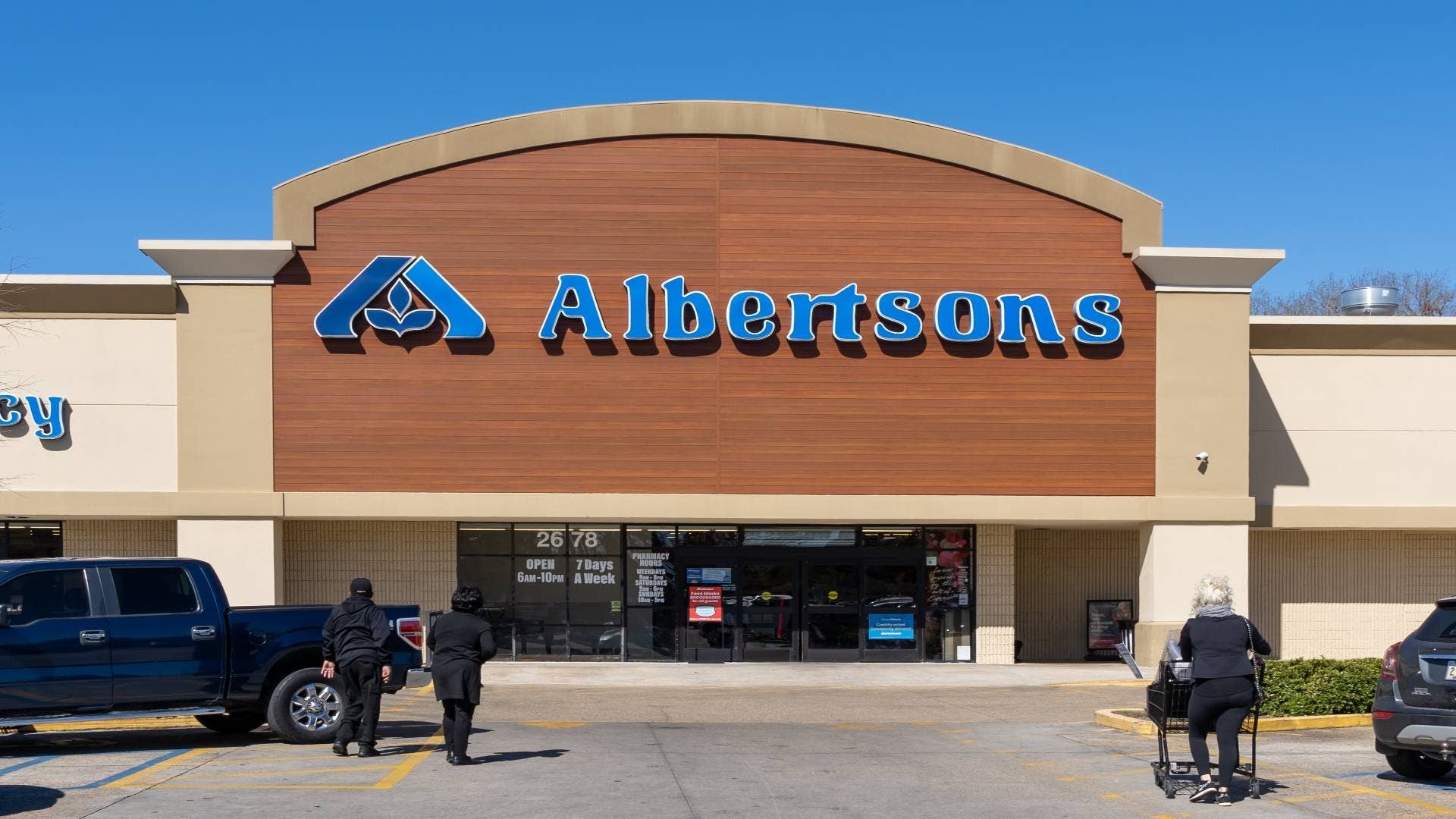
New foot traffic data from Advan Research shared with TheStreet shows what that shift looks like on the ground, and how Kroger’s starting position compares to Albertsons, which announced a similar pivot earlier this year.
Kroger and Albertsons have different strengths
Foran is confident that Kroger can turn around its business.
“Supermarkets done well are a fantastic business. They deliver value, they deliver convenience, and they hold a trusted relationship with their customers,” he said.
The Advan data showed that the two chains are coming from different starting points. Key findings from Advan’s location data include:
- Kroger enters this transition with a stronger-performing store base than Albertsons. Both chains have roughly 20% of locations in the weakest-performing tier by relative traffic, the group most likely to see closures or divestitures as both companies prune their footprints.
- The EDLP-plus-perishables strategy (enhanced prepared foods, more localization, deeper delivery build-out) signals a format shift that puts pressure on two adjacent groups: Grocery-anchored shopping centers that rely on grocer-driven foot traffic and packaged food suppliers whose shelf space and promotional terms depend on Kroger’s old model.
- If Kroger’s e-commerce push actually reaches 30% of sales, that changes the traffic math for every co-tenant in a Kroger-anchored center: fewer trips, different trip patterns, and less incidental spend at neighboring stores.
Shutterstock
Kroger and Albertsons face a real challenge
Thomas Paulson, head of market insights at Advan, answered some questions from TheStreet about the challenges facing both grocery chains.
TheStreet: Can Kroger and Albertsons offer a competitive product compared to Walmart, Aldi, and Costco?
Thomas Paulson: On product alone, no. Walmart, Aldi, and Costco have scale advantages and business model differences that neither Kroger nor Albertsons can match. Where they can compete is on offering: localized and farm-to-store produce, a better/tailored prepared meals / ready-to-eat offering, better service, easy-to-access, convenient stores.
TheStreet: Was denying the merger a fundamental mistake?
Paulson: No. The merger would have given Kroger and Albertsons more scale with vendors, but it would have made localization harder, and localization, not scale, is what both companies actually need right now.
TheStreet: Will Kroger’s e-commerce have a negative ripple effect on its plazas?
Paulson: Yes. As e-commerce moves toward Foran’s targeted 30% of sales, it becomes a real headwind to traffic for co-tenants in Kroger-anchored centers. That shift also increases the leverage of limited-service and quick-service operators over landlords, since away-from-home eating captures more share of stomach as at-home grocery visits decline.
More Kroger:
- Kroger and Costco shoppers refuse to let record gas prices win
- Kroger’s new offer helps you save on gas
- Kroger isn’t done pulling brands after Red Bull and Boar’s Head
TheStreet: Is there really that much more fat to cut?
Paulson: That was the biggest surprise to me. Apparently, there’s more to trim.
TheStreet: Are we going to see widespread closures?
Paulson: More likely, more consolidation, along the lines of what happened with Giant Eagle. Regional players are increasingly just handing over the keys at a lower valuation multiple than the acquirer would otherwise pay, rather than compete store by store.
Related: Target has a problem that sends shoppers to Amazon
